The Federal Reserve raised rates again, and rising interest rates look…

How to Choose a Financial Advisor: 5 Questions to Ask Before Hiring One
Knowing how to choose a financial advisor is an important step before trusting someone with your financial future. Start by asking these five important questions.
Before trusting someone with your financial future, make sure you ask these five important questions.
Thinking about hiring a financial advisor? Before choosing one, ask these five key questions about their investment philosophy, fees, experience with clients like you, financial planning services, and how your assets are protected. These questions can help you find an advisor who aligns with your long term financial goals.
Working with a financial advisor can help guide important decisions around investing, taxes, retirement planning, and long term wealth management.
Many people consider contacting an advisor for the first time but are unsure what to ask during that initial meeting. It is common to feel uncertain or worry about asking the wrong questions.
Choosing the right financial advisor can feel overwhelming, but asking the right questions can help you evaluate whether an advisor’s philosophy, experience, and planning approach align with your goals.
The reality is that you already understand many of the core ideas behind good financial decisions.
If you applied to several colleges instead of relying on just one, you were diversifying. If you chose a job with better benefits instead of slightly higher pay, you were balancing risk and reward. If you wear a life jacket even though you know how to swim, you are managing risk.
These same principles apply to investing and financial planning.
Your first meeting with a financial advisor should feel less like a sales pitch and more like the beginning of a long term partnership. You are evaluating someone who may help guide your financial future for decades.

In This Article
- How to choose the right financial advisor
- Understanding an advisor’s investment philosophy
- How financial advisors get paid
- Whether the advisor works with clients like you
- Services beyond managing investments
- How your assets are protected
- Whether working with a financial advisor is worth it
How Do You Choose the Right Financial Advisor?
How Do You Choose the Right Financial Advisor? Understanding how to choose a financial advisor starts with asking the right questions.
A good financial advisor should be able to clearly explain:
- Their investment philosophy and how they manage market uncertainty
- How they are compensated and what the total cost of advice will be
- Whether they work with clients in financial situations similar to yours
- What services they provide beyond managing investments
- How your assets are protected and where your accounts are held
These questions help you evaluate whether an advisor’s approach aligns with your goals, values, and long term financial plan.
1. What Is Your Investment Philosophy?
A financial advisor’s investment philosophy explains how they approach markets, risk, and long term investing. That philosophy guides how advisors help clients navigate both strong markets and periods of uncertainty.
If an advisor claims they can eliminate risk or consistently predict market movements, that should raise concerns. Markets work because uncertainty exists. Without uncertainty there would be no opportunity for long term returns.
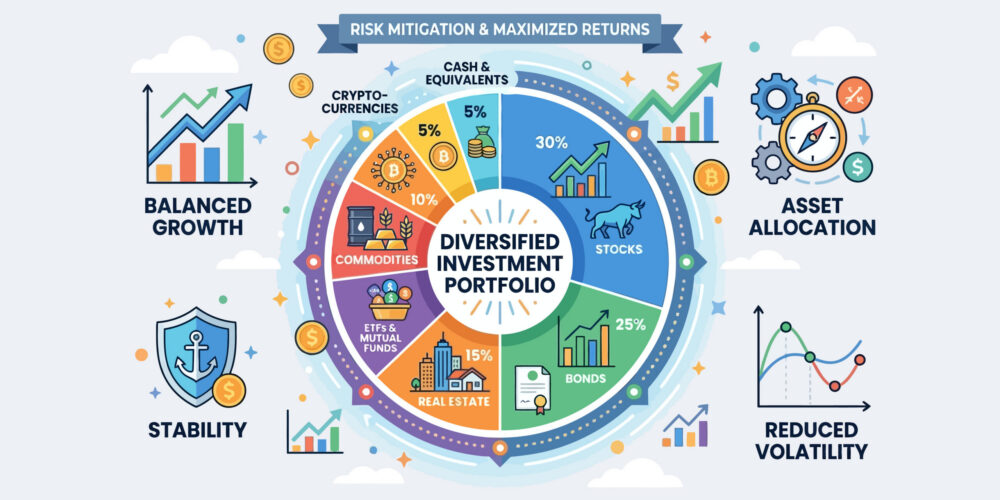
A disciplined advisor focuses on preparing for uncertainty rather than predicting the future. This often means building diversified portfolios, maintaining a long term perspective, and helping clients stay disciplined during periods of market volatility.
At CAM Investor Solutions, our investment philosophy focuses on disciplined long term investing and diversified portfolios designed to help clients pursue their financial goals through changing market environments.
2. How Do Financial Advisors Get Paid?
Financial advisors may be compensated through asset based fees, flat planning fees, hourly fees, or commissions depending on their business model.
Transparency about fees is one of the most important factors when choosing a financial advisor.
Some advisors charge a percentage of the assets they manage, while others charge flat planning fees or hourly rates. Many investors also seek fee only financial advisors whose compensation comes directly from clients rather than commissions from financial products.
The most important factor is alignment. You should clearly understand how your advisor is compensated and whether their incentives support your long term financial success.
Ask for a clear explanation of:
- Advisor management fees
- Underlying investment expenses
- Trading costs
- Custodian or platform fees
- Whether financial planning services are included
A trustworthy advisor should be able to explain every cost and why their structure works for clients like you.
3. Do You Work With Clients in My Situation?
Financial planning is highly personal, and different clients face different financial decisions.
Some advisors specialize in working with specific types of clients such as:
- Professionals building wealth during their careers
- Individuals approaching retirement
- Business owners
- Families managing an inheritance
- Employees with equity compensation such as stock options or RSUs
Ask potential advisors how they typically help clients who share your financial circumstances.
An experienced advisor should be able to explain the types of strategies they commonly discuss with clients like you and how they help navigate complex financial decisions.
4. How Do You Help Beyond Investments?
Investment management is only one part of comprehensive financial planning.
Many financial advisors help clients coordinate other important aspects of their financial lives including:
- Tax planning strategies
- Retirement income planning
- Estate and legacy planning
- College savings strategies
- Insurance and risk management
Strong advisors often work alongside CPAs, estate attorneys, and other professionals to ensure your financial plan is fully coordinated.
This broader approach helps ensure that your investments, taxes, and long term planning all support the same goals.
5. How Are My Assets Protected?
Independent custodians typically hold client assets while the financial advisor provides guidance and investment management.
Understanding where your money is held is an important safeguard when working with a financial advisor.
With this structure, your advisor directs investment decisions according to your financial plan, but the custodian safeguards the assets and maintains the accounts.
This separation creates transparency and protection because your advisor does not directly hold your funds.
Why the Right Financial Advisor Relationship Matters
Understanding how to choose a financial advisor often begins with finding someone who listens carefully to your goals.
During an initial meeting, a thoughtful advisor may spend more time asking questions than presenting solutions. They want to understand your goals, your concerns, and what financial success means for your family.
Some common questions advisors may ask include:
- What are your long term goals
- What financial decisions feel most uncertain right now
- What would financial success look like for you and your family
These conversations help ensure your financial plan reflects your priorities and values.
The right advisor often becomes part educator, part strategist, and part coach. They help clients stay disciplined during uncertain markets and make thoughtful decisions during major life transitions.
Is a Financial Advisor Worth It?
For many people, working with a financial advisor provides clarity, discipline, and long term planning that can be difficult to manage alone.
A good financial advisor helps clients build diversified portfolios, develop tax aware strategies, create retirement income plans, and navigate complex financial decisions such as inheritances or equity compensation.
The value of a financial advisor often comes not from predicting markets, but from helping clients make thoughtful decisions, avoid costly mistakes, and stay focused on long term financial goals.
At CAM Investor Solutions, we work with clients to integrate investments, tax strategy, and long term planning into a coordinated financial plan designed to support their goals over time.
Thinking About Choosing a Financial Advisor?
Learning how to choose a financial advisor is an important decision, and the right partnership begins with a conversation.
If you would like to learn more about how CAM Investor Solutions helps clients build disciplined investment strategies and coordinated financial plans, we would be happy to speak with you.
You can learn more about our approach or contact our team at CAM Investor Solutions to start a conversation.
Frequently Asked Questions About Hiring a Financial Advisor
When should someone hire a financial advisor?
People often hire a financial advisor when they are building wealth, preparing for retirement, receiving an inheritance, selling a business, or navigating complex financial decisions such as equity compensation or tax planning.
What is the difference between a financial advisor and a custodian?
A financial advisor provides guidance and investment management according to your financial plan. A custodian is the financial institution that holds and safeguards your assets.
***
This article incorporates ideas originally shared by David Booth, Founder and Chairman of Dimensional Fund Advisors, and has been adapted for readers of CAM Investor Solutions.
____________________________________________________
About CAM Investor Solutions
CAM Investor Solutions, a fee-only independent Registered Investment Advisor, has offices located in Colorado, Florida, and Texas. As a growing wealth management firm, we focus on the needs of our clients to improve their quality of life. Our firm’s commitment to innovation through rigorous academic research enhances how we serve a multi-generational audience.
CAM’s Specialties Include:
- Managing concentrated wealth
- Planning for stock and option compensation / company IPOs
- Advanced tax managed investment strategies
- Custom retirement income strategies
- Cash management
Contact:
CAM Investor Solutions
info@caminvestor.com
1-844-247-0787
https://caminvestor.com
CAM Disclosure
M & A Consulting Group, LLC, doing business as CAM Investor Solutions is an SEC registered investment adviser. As a fee-only firm, we do not receive commissions nor sell any insurance products. We provide financial planning and investment information that we believe to be useful and accurate. However, there cannot be any guarantees.
This blog has been provided solely for informational purposes and does not represent investment advice. Nor does it provide an opinion regarding fairness of any transaction. It does not constitute an offer, solicitation or a recommendation to buy or sell any particular security or instrument or to adopt any investment strategy.
Past performance is not a guarantee of future results. Diversification does not eliminate the risk of market loss. Tax planning and investment illustrations are provided for educational purposes and should not be considered tax advice or recommendations. Investors should seek additional advice from their financial advisor or tax professional.


Related Posts